Since 2023, I am the Master Coordinator of the MS-EE Signals & Systems Track. In addition, I presently teach the following courses
Instructors: Dr. R.T. Rajan (Responsible), Dr. Justin Dauwels
This Master (Graduate) level course covers the basics of detection and estimation theory, as used in statistical signal processing, adaptive beamforming, radar, biomedical, telecommunication, system identification, and elsewhere. In Part I: Optimal estimation covers minimum variance unbiased estimators, the Cramer-Rao bound, best linear unbiased estimators, maximum likelihood estimation, least squares, Bayesian estimation techniques including Wiener and Kalman filters. In Part II: Detection theory covers simple and multiple hypothesis testing, the Neyman-Pearson Theorem, Bayes Risk, and testing with unknown signal and noise parameters.
Instructors: Dr. M. Kok (Responsible), Dr. R.T.Rajan (Responsible)
This Advanced Master (Graduate) level course aims to teach and apply probabilistic sensor fusion methods to practical real life problems and datasets. The main focus is on implementing these methods as well as on understanding, evaluating and interpreting the estimation results and the workings of the algorithms. The course focuses on nonlinear filtering techniques (extended and unscented Kalman filtering, and particle filtering), Gaussian processes, as well as distributed versions of these algorithms.
Instructors: Prof. Dr. ir. Geert Leus (Responsible), Dr. G. Joseph, Dr. R.T.Rajan
This Master (Graduate) level course provides a comprehensive treatment of signal processing algorithms for modeling discrete-time signals, designing optimum filters, estimation of the power spectrum of a random process, and implementing adaptive filters. These are important topics that are frequently encountered in professional engineering, and major applications such as digital communication, array processing, and multimedia (speech and audio processing, image processing). The course provides a framework that connects signal models to filter structures, formulates filter design as an optimization problem, solved in turn via linear algebra techniques applied to structured matrices. The connections between these topics are strong, and provide insights that can also be used in other disciplines.
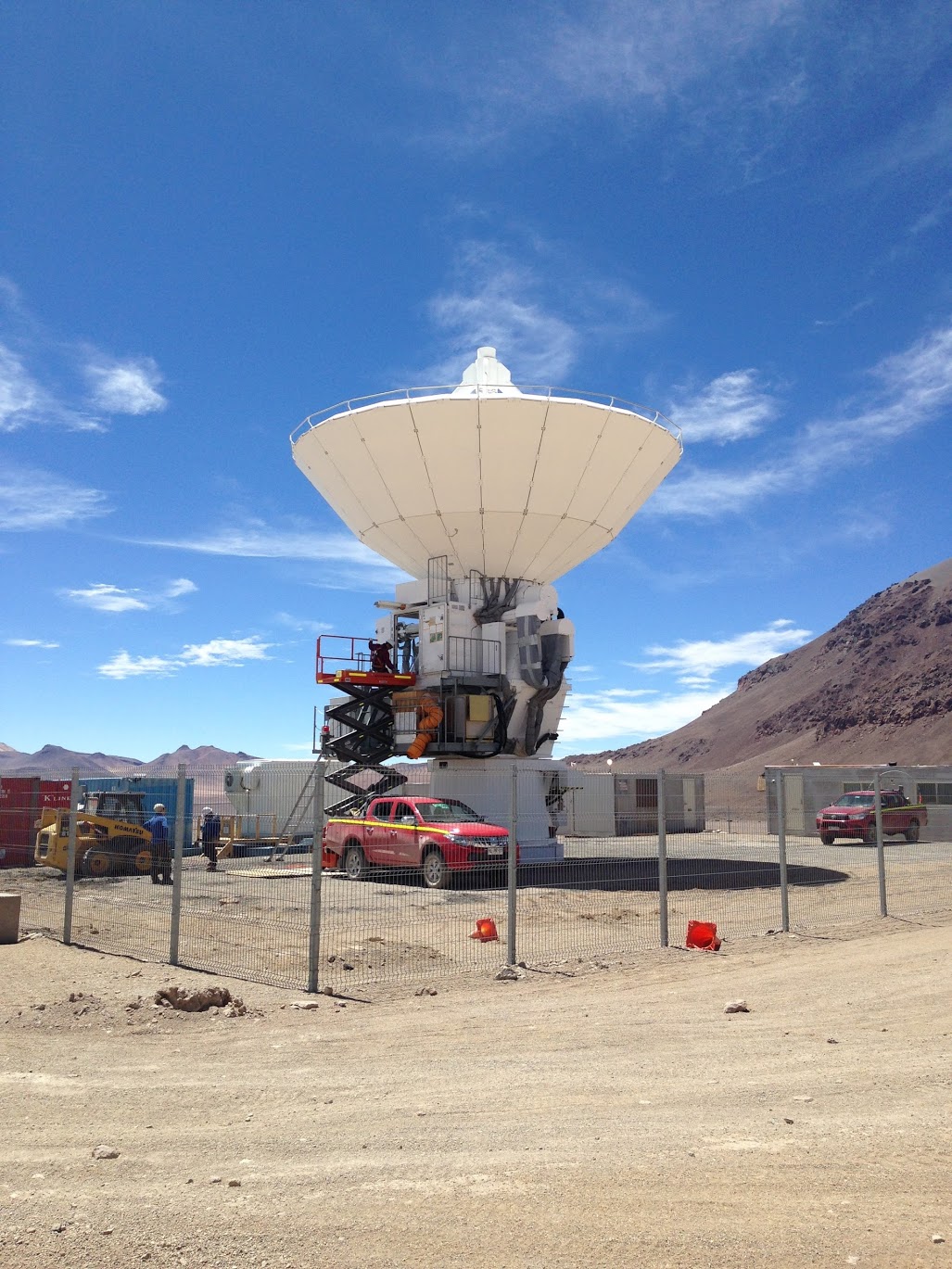
Instructors: Dr. Akira Endo (Responsible), Dr. R.T.Rajan
This undergraduate level course gives an introduction to radio astronomy and related instrumentation. Radio astronomy is a field that studies the universe using electromagnetic waves of frequencies from below 30 kHz up to 1 THz. Scientific targets are very broad, including the origin and fate of the Universe, galaxies, black holes, neutron stars, lifecycle of stars and planets, evolution of galaxies and galaxy clusters, etc. Many large-scale antenna-style observatories on ground and in space are in operation, and technology for the next generation is in active development, also at TU Delft. It is important here to realize that this extremely rich field of science can be traced back to several extremely enthusiastic electrical engineers who carefully studied the radio signals from space, either as a hobby or as part of their profession. In this course we will take radio astronomy as an exciting example of applied science for instrumentation, and instrumentation for fundamental science.